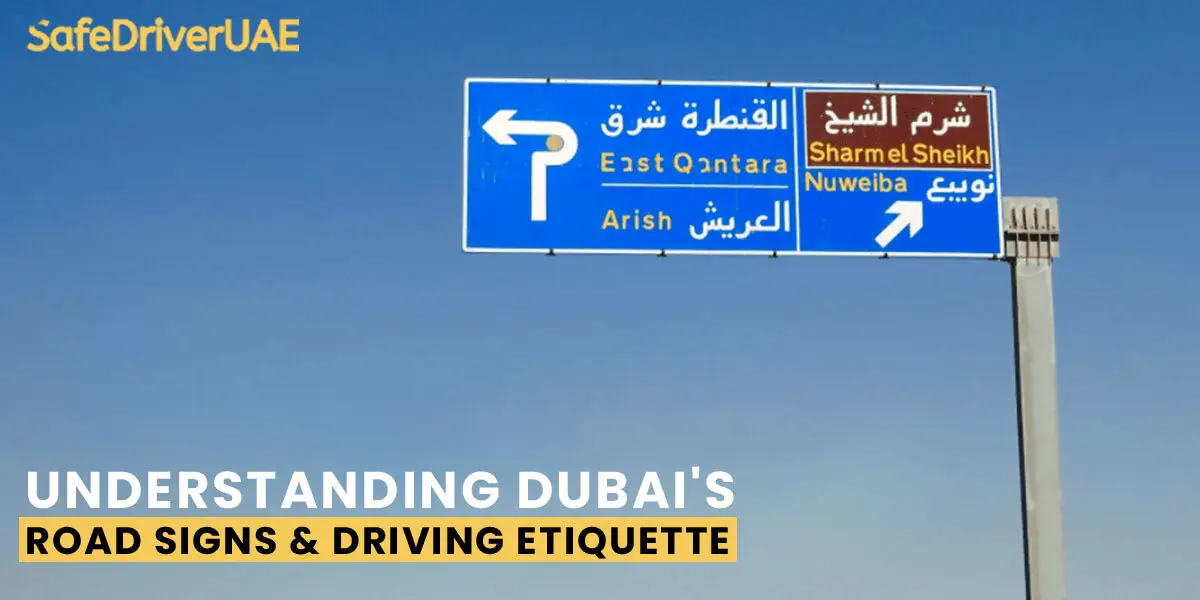


Driving in Dubai can shift from smooth to unpredictable in seconds… The roads are modern, the signage is clear and navigation apps are reliable. Yet sudden lane changes and last-minute exits are common reminders that understanding the rules is important… But mastering the driving culture is what truly keeps you safe.
This guide explains Dubai’s road signs, road markings and real-world driving manners simply. It is written for tourists, new residents and anyone who wants to drive more confidently in Dubai.
Overview of Dubai’s Traffic Rules and Road Sign System
The road infrastructure in Dubai is systematically managed by the Roads and Transport Authority, with traffic laws enforced by the Dubai Police.
A few quick basics to keep in mind:
- Dubai drives on the right-hand side.
- Speed enforcement is strict and mostly automated.
- Lane discipline matters more on highways like Sheikh Zayed Road.
- Many “rules” are legal, but many “habits” are social. Ignore either one and you will have a bad day.
If you are new to the city and prefer not to drive yourself, Safe Driver UAE is an ideal option… They can help by providing a personal driver to take you where you need to go.
Types of Road Signs in Dubai
Dubai uses standard categories of signs. Once you learn the patterns, you will decode most signs in seconds.
Regulatory Road Signs (Mandatory Rules for Drivers)
These signs mean “do this” or “do not do this.” They are legal instructions, not suggestions.
Common examples include:
- Speed limits and restrictions
- Stop and give way
- No entry and no U-turn
- Parking restrictions
These signs are the backbone of Dubai traffic rules and are enforced heavily.
Warning Road Signs (Hazards and Safety Alerts)
Warning signs tell you what could happen next. They help you prepare early, which is useful in a city where people change lanes late.
You will often see warnings for:
- Pedestrian crossings
- Speed humps
- Roundabouts ahead
- Slippery roads during rain or sand
Mandatory Road Signs (Required Driving Directions)
Mandatory signs tell you the required direction or lane action. Examples you will often see:
- Keep right / keep left
- Straight only
- Turn left only / turn right only
- Roundabout direction arrows
Informational Road Signs (Guidance and Services)
These are the signs that keep you from missing exits and doing the “Dubai last-second swerve.”
They include:
- Highway direction boards (often green)
- Route numbers and exit numbers
- Hospital, petrol station and services
Dubai also uses a color system for different route types.
Temporary and Construction Road Signs
Dubai upgrades roads constantly. Temporary signs usually appear in:
- Roadworks zones
- Detours and lane shifts
- Reduced speed areas
Treat these signs seriously. Fines and accidents in construction zones are a quick way to ruin your week.
Most Common Road Signs Every Driver Should Know in Dubai
This section covers the signs you will see repeatedly, especially if you drive in busy areas like Downtown Dubai, Deira, Al Barsha, Jumeirah and near major interchanges.
Stop Sign
A stop sign means a full stop. Not “slow down and roll.” A complete stop before the line. Quick habit that helps:
- Stop fully, look left and right, then move when safe.
Give Way Sign
“Give way” means yield to traffic that has priority. You slow down and let others pass if needed. You do not force your way in just because you are feeling brave today.
No Entry Sign
This sign is simple: do not enter. In Dubai, this often appears:
- At one-way roads
- Service roads
- Parking exits
Ignore it and you may end up driving against traffic, which is the kind of mistake that becomes “viral” for all the wrong reasons.
Speed Limit Signs
Speed limit signs are everywhere, and the limits can change quickly. A practical tip:
- Watch for speed changes near exits, bridges, school zones, and work zones.
Dubai is known for a speed “buffer” in many areas, commonly described as 20 km/h over the posted limit. Still, do not treat that as a target. Stick to the posted limit when possible because enforcement can vary by road and situation.
No U-Turn Signs
Dubai uses U-turns in many places, but only where allowed. “No U-turn” means exactly that. Common places where U-turns are restricted:
- Near signalized intersections
- In tight service roads
- In high-speed zones
Pedestrian Crossing Signs
Dubai has many controlled crossings, but people still cross in unexpected places. Best practice:
- Slow slightly near crossings and schools.
- Expect pedestrians to appear late, especially near malls and bus stops.
Roundabout Signs
Roundabouts are common in residential zones and older areas. The sign warns you early so you can choose the correct lane.
If you are unsure, slow down and pick the safer option. Panicked lane changes inside a roundabout are how people create instant drama.
Understanding Road Markings in Dubai
Road markings are the quiet boss of the road. People focus on signs, then ignore the lines. Don’t be that person.
Solid and Broken Lane Lines
- Broken line: lane changes are allowed if safe.
- Solid line: lane changes are not allowed (or strongly restricted).
On highways, crossing solid lines near exits is a common mistake. Dubai exits come fast, so plan early.
Directional Arrows and Lane Guidance
Lane arrows tell you what the lane is for. If the arrow says “left only,” then the lane is left only. You cannot “negotiate” with paint.
Good habit:
- Read lane arrows early, not at the last 20 meters.
Pedestrian Crosswalk Markings
Crosswalk markings matter even if the pedestrian is not standing perfectly on the line. In busy areas, be extra cautious.
Yellow Box Junctions and Restricted Areas
Yellow boxes are “keep clear” zones. You should not enter unless your exit is clear. Simple rule:
- If you stop inside the yellow box, do not enter it.
Roundabout Rules and Driving Practices in Dubai
Roundabouts are not scary. People just make them scary.
Right-of-Way at Roundabouts
The basic rule: vehicles already in the roundabout have priority. You enter only when there is a safe gap.
Correct Lane Usage at Roundabouts
Lane choice depends on your exit. A general approach (always follow local signs if posted):
- First exit: right lane
- Straight/second exit: usually right lane is ok, but traffic flow matters
- Third exit or U-turn: left lane
Two-lane roundabout guidance is commonly taught this way in the UAE driving resources.
Using Indicators When Entering and Exiting
Indicators reduce confusion, especially in mixed-traffic Dubai.
- Signal left if you are staying in or taking later exits (where applicable)
- Signal right before you exit
- Do not signal randomly. People will believe you and act on it.
Essential Driving Etiquette in Dubai
Etiquette is what keeps driving smooth… Dubai is a multinational city. Different people bring different driving habits… Etiquette is the common understanding that keeps everyone driving smoothly.
Lane Discipline and Overtaking Rules
On major roads, the left lane is usually for overtaking… If you sit there slowly, you will cause aggressive tailgating.
Better approach:
- Keep right when you are cruising.
- Use the left lane to pass, then move back.
This matters most on highways and fast roads.
Proper Use of Indicators
If there is one habit that instantly makes you safer in Dubai, it is signaling early. Use indicators when:
- Changing lanes
- Exiting roundabouts
- Leaving parking areas
- Moving around buses and stopped vehicles
Yes, some drivers do not signal. That does not mean you should copy them.
Maintaining Safe Following Distance
Tailgating is common and dangerous. Keep space, especially at higher speeds. Simple spacing rule:
- Leave enough room that you can stop smoothly if the car ahead brakes.
Respecting Pedestrians and Cyclists
Cyclists and e-scooter riders are more common in some areas, particularly near beaches, residential communities, and cycling paths. Stay especially alert:
- Near crossings
- At U-turns and slip roads
- When turning right on red (where allowed)
Avoiding Aggressive Driving
Aggressive driving escalates fast. The road is not a place to prove anything.
Avoid:
- Brake checking
- Blocking merges
- Racing to close gaps
If you prefer not to drive, hire a licensed driver service from Safe Driver UAE. They provide professional driving services to ensure your car is driven carefully.
Speed Limits and Traffic Camera Enforcement in Dubai
Dubai uses automated enforcement heavily… Cameras do not get tired, do not get distracted, and do not accept excuses.
Standard Speed Limits on Dubai Roads
Speed limits vary by road type and zone. You will commonly see different limits on:
- City roads
- Highways
- School zones
- Residential areas
Always trust the posted sign first.
Radar Cameras and Speed Monitoring
Dubai cameras can enforce more than speed. Some systems also monitor lane behavior and other violations.
Common Traffic Violations and Fines
Common ways people get fined:
- Speeding
- Using a phone while driving
- Not wearing a seatbelt
- Tailgating
- Illegal lane changes near solid lines
- Blocking intersections
The easiest way to avoid fines is boring: drive predictably and follow signs.
To avoid expensive mistakes, check our list of common traffic violations and fines in Dubai in 2026 before you hit the road.
Driving Safely and Responsibly in Dubai
Dubai is a great place to drive once you understand the system… Learn the key signs, respect road markings and drive with calm lane discipline. The safe drivers in Dubai are not the fastest. They are the most predictable.
If you remember nothing else, remember this: road signs are the rules, road markings are the boundaries, and etiquette is what stops the whole thing from turning into a daily argument on wheels.
Avoid the stress of Dubai traffic and let a professional handle the driving. Safe Driver UAE provides a premium driver who drives your own car, giving you a safer and more relaxed journey across the city.
FAQs
What Side of the Road Do People Drive on in Dubai?
People drive on the right-hand side in Dubai.
What Is the Speed Limit Tolerance in Dubai?
Dubai is commonly described as having a 20 km/h buffer on many roads… But you should rely on posted limits and drive safely.
Who Has Priority at Roundabouts in Dubai?
Vehicles already inside the roundabout generally have priority, and entering traffic must give way.
What Happens If You Violate Traffic Rules in Dubai?
You can face fines, black points and in serious cases, vehicle impoundment or legal action.
Can I use my mobile phone while driving in Dubai?
No, using a phone while driving is illegal unless fully hands-free… It can lead to fines and black points.